
Uganda
11 regulators · 16 laws & regulations · 2 obligations
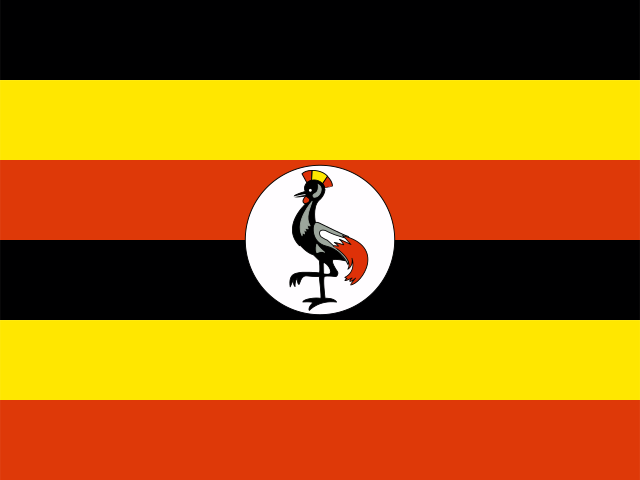
Uganda, or the Republic of Uganda, is a nation that lies in the East African Great Lakes region.

Overview
Uganda, or the Republic of Uganda, is a nation that lies in the East African Great Lakes region. The nation has a population of around 48.8 million and a fast-growing economy due to the participation of the agricultural, service, and oil industries, where the latter is connected with the East African Crude Oil Pipeline. From the point of geopolitics, Uganda is a nation that participates in cross-border activities with countries like the Democratic Republic of the Congo and South Sudan.
In as much as the domain of risk and compliance is concerned, there have been some milestones made in relation to anti-money laundering and combating financing of terrorism (AML/CFT) measures in Uganda. For instance, Uganda has been delisted from the FATF grey list as a country under an enhanced monitoring regime, which is also echoed by the European Union, which has also delisted Uganda from its list of high-risk third countries. The regulatory body that governs financial compliance in Uganda is the Financial Intelligence Authority (FIA). In as much as corporate compliance is concerned, there have been some advancements through the aid of the Uganda Registration Services Bureau (URSB) through the Online Business Registration System (OBRS), where tough measures are adopted in relation to statutory filings. It is important for companies to note transactional compliance since there are some localized risks involved.
With respect to sanctions, it is important to note that there are no comprehensive international or unilateral trade sanctions imposed on the nation of Uganda at this time. Rather, the country fully complies with the sanctions lists compiled by the United Nations Security Council (UNSC), utilizing them in an administrative sense to control access to its domestic financial system. Although there are no autonomous sanctions lists in place, international compliance groups will often use the OFAC and EU lists when screening Ugandan entities for secondary reasons.
Uganda’s political structure is that of a multi-party republic which is extremely dominated by the president of the country, Yoweri Museveni, who has held on to executive powers since 1986. The political environment in the country has attracted critical attention from outside the country due to a narrow political space and the declining state of democratic governance through the suppression of political opposition, media houses, and anti-corruption protesters. In addition, the passing of highly controversial national legislation like the Anti-Homosexuality Law and the detention of environmental activists pose serious ESG and human rights compliance risks to international companies and investors in the country.
| Law or regulation | Type | Year | Regulator | Source |
|---|---|---|---|---|
| The National Payment Systems Regulatory Sandbox Framework, 2021 status not recorded | Guideline | 2021 | BoU | official |
| National Payment Systems Act, 2020 | Act | 2020 | BoU | official |
| Data Protection and Privacy Act (Cap. 97) | Act | 2019 | PDPO | official |
| Insurance Act (Cap. 191) | Act | 2017 | IRA | official |
| Tier 4 Microfinance Institutions and Money Lenders Act, 2016 | Act | 2016 | UMRA | official |
| Anti-Money Laundering Regulations, 2015 status not recorded | Regulation | 2015 | FIA | official |
| Anti-Money Laundering Act (Cap. 118) | Act | 2013 | FIA | official |
| No instruments match these filters. | ||||
Industry compliance
Essential obligations
All obligations →| Obligation | Timing | Regulator | Source | Detail |
|---|---|---|---|---|
| Personal data breach notification | Immediately (s. 23(1)) | PDPO | source | |
Section 23(1) requires a data collector, processor or controller that believes personal data has been accessed or acquired by an unauthorised person to notify the Authority (NITA-U) immediately and in the prescribed manner. Under s. 23(2) the Authority decides whether the data subject must also be told. |
||||
| Protection of whistleblowers from victimisation | — | — | source | |
Section 9(1) bars employers and others from victimising a person for a protected disclosure, and s. 9(2) lists dismissal, suspension, demotion and harassment as forms of victimisation. Disclosures may be made internally (s. 4) or externally to bodies listed in s. 4(3), including the Inspectorate of Government; victimising a whistleblower is an offence (s. 16). |
||||
| No obligations match these filters. | ||||
Quick links — official sites
- BoU — Bank of Uganda
- CMA — Capital Markets Authority
- FIA — Financial Intelligence Authority
- IRA — Insurance Regulatory Authority of Uganda
- PDPO — Personal Data Protection Office
- URBRA — Uganda Retirement Benefits Regulatory Authority
- MGLSD — Ministry of Gender, Labour and Social Development
- NITA-U — National Information Technology Authority, Uganda
- UCC — Uganda Communications Commission
- UMRA — Uganda Microfinance Regulatory Authority
- National CERT-UG — Uganda National Computer Emergency Response Team
Newsletter
Get CRCGS Weekly
A free weekly email from the Centre for Risk, Compliance & Governance Studies: the week's regulatory news, new regulations, updated country profiles, and the Knowledge Hub's latest reading and events.