
Turkmenistan
5 laws & regulations · 3 obligations
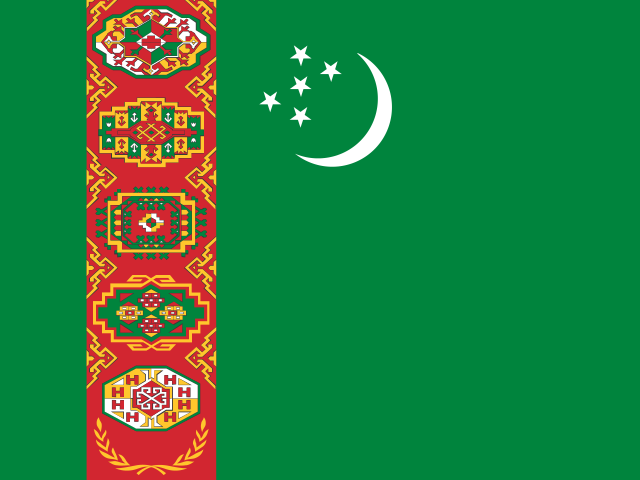
The Republic of Turkmenistan is an entirely landlocked country in the southern-central part of Central Asia.
Overview
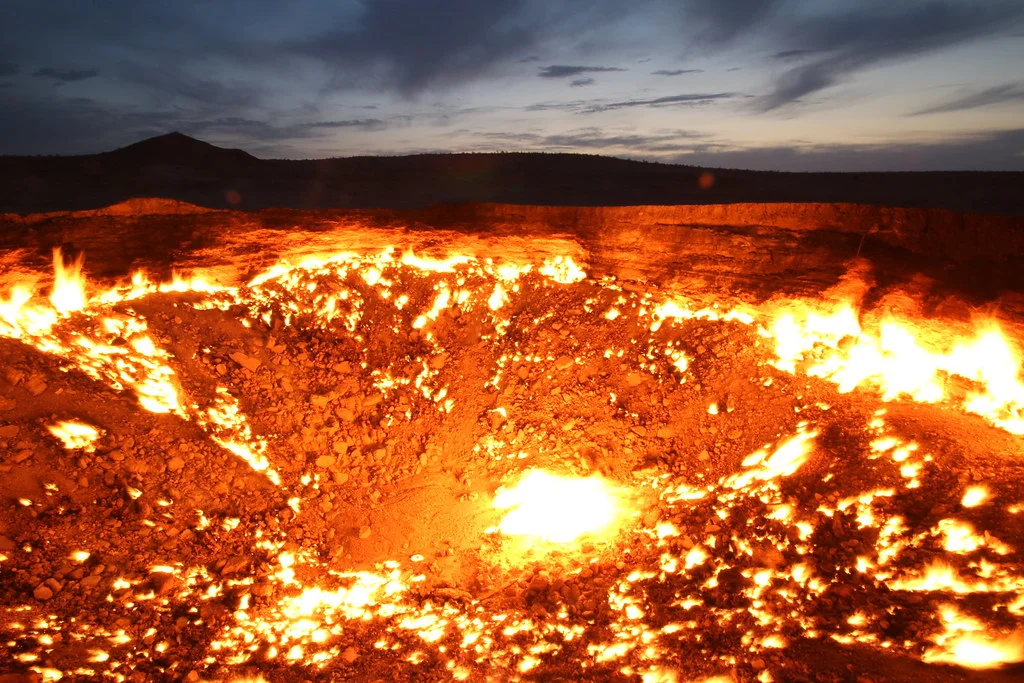
The Republic of Turkmenistan is an entirely landlocked country in the southern-central part of Central Asia. In terms of economy, this country is known for being dependent on hydrocarbons, with natural gas and oil accounting for a substantial amount of its export earnings and state revenues. Overbearing government control of the private sector, agricultural production, and monetary policy prevails in the country. Turkmenistan is a country that can be best described as an authoritarian political system with highly centralized dynastic rule. Control of power lies primarily with President Serdar Berdimuhamedov along with his father, Gurbanguly Berdimuhamedov, who acts as the head of the country’s council.
For corporate compliance purposes, engaging with or operating in Turkmenistan is an extremely risky venture because of the systemic nature of the problem. Public corruption is a deep-rooted problem in all institutions, ranging from the management of land, through enforcement of customs duties, to major decrees on public infrastructure development. The country is known to perform poorly on international transparency indicators, scoring a poor 17 out of 100 on the 2025 Corruption Perceptions Index by Transparency International, placing it at position 167 out of 182 territories evaluated. While AML procedures and CTF regulations are in place, there is a problem of lack of enforcement and general nepotism in public administration. From the regulatory point of view, the Eurasian Group on Combating Money Laundering (EAG) improved Turkmenistan's ratings on some technical parameters in mid-2026. Nonetheless, Turkmenistan still qualifies for the "enhanced follow-up" procedure because of systemic problems of practical implementation.
To date, no universal or international autonomous sanctions against Turkmenistan have been imposed on the sovereign state by any international body such as the UN or the US Office of Foreign Assets Control (OFAC). However, the country officially enforces the UN sanctions but has no list of autonomous sanctions. In the absence of an overall embargo, high levels of financial compliance remain a problem. Severe controls and distortions in the exchange rate constitute major obstacles to capital flight. Business dealings are also isolated from the outside world by the country’s poor development of its banking sector, the presence of a directed credit system, and a complete lack of multilateral development programs. As a result, FDI has become largely concentrated within state-sanctioned corridors with heavy emphasis on the maintenance of the energy infrastructure and pipelines from the neighboring region, primarily China.
| Law or regulation | Type | Year | Regulator | Source |
|---|---|---|---|---|
| Türkmenistanyň Zähmet kodeksine üýtgetmeler we goşmaçalar girizmek hakynda Türkmenistanyň Kanuny (Law of Turkmenistan on Amendments and Additions to the Labour Code) status not recorded | Act | 2025 | — | official |
| Wirtual aktiwler hakynda Türkmenistanyň Kanuny (Law of Turkmenistan on Virtual Assets) | Act | 2025 | — | official |
| Türkmenistanyň Kanuny Elektron hökümet hakynda (Law of Turkmenistan on E-Government) status not recorded | Act | 2022 | — | official |
| Law of Turkmenistan amending the Law on Information and its Protection (QR codes) status not recorded | Act | 2021 | — | official |
| Şahsy durmuş barada maglumat we ony goramak hakynda Türkmenistanyň Kanuny (Law of Turkmenistan on Information about Personal Life and its Protection) status not recorded | Act | 2017 | — | official |
| No instruments match these filters. | ||||
Industry compliance
Essential obligations
All obligations →| Obligation | Timing | Regulator | Source | Detail |
|---|---|---|---|---|
| Lawful basis, notice and data subject rights | Ongoing; requests answered within 1 working day | — | source | |
Art. 7 requires written consent stating the operator, purposes, data categories and duration, with exceptions in Art. 9. Art. 26 gives data subjects the right to know what is held, ask for correction, blocking or deletion, and withdraw consent. Art. 27 requires the operator to supply data, answer, and correct, block or delete within one working day of a valid request, and to remedy unlawful processing, or delete data after consent is withdrawn, within three working days. Art. 20 requires notice to the data subject within one working day when data passes to a third party. |
||||
| Obtain a permit before providing virtual-asset services and a licence to operate as an exchange operator | Before operating; ongoing | — | source | |
Art. 27 requires service providers to be legal entities registered in Turkmenistan and acting on a permit; Art. 11 gives the Central Bank power to issue the permits. Offshore residents, persons on terrorism-related lists and persons with unexpunged convictions cannot be founders, shareholders or officers. Art. 30 describes exchange operators as licensed legal entities, entered in the register the Central Bank keeps. |
||||
| Register as a miner of virtual assets | Before mining begins | — | source | |
Art. 18 obliges miners to register with the state under a procedure set by the Cabinet of Ministers and gives them a registration certificate with no expiry (Art. 18(4)). Art. 17 sets up an electronic miner register, and covert mining is prohibited (Art. 16). |
||||
| No obligations match these filters. | ||||
Newsletter
Get CRCGS Weekly
A free weekly email from the Centre for Risk, Compliance & Governance Studies: the week's regulatory news, new regulations, updated country profiles, and the Knowledge Hub's latest reading and events.